
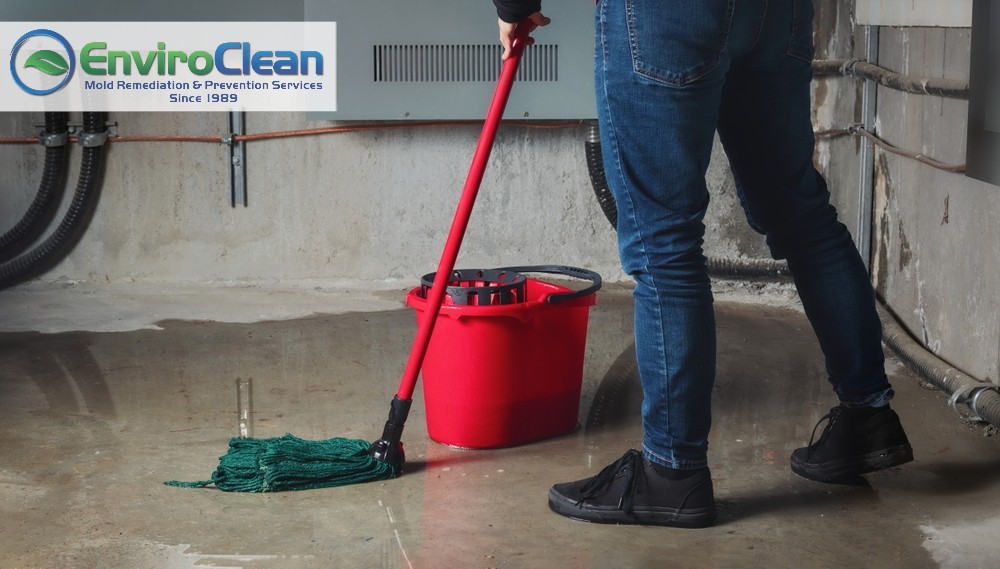
Floodwater doesn’t stay where you can see it. Once it reaches the floor, it works its way into subfloors, wall cavities, and insulation: spaces that stay damp long after the puddles are gone. Mold spores can begin colonizing within 24 to 48 hours of that exposure, so the days right after a flood matter more than most homeowners expect.
Here are six steps that can help protect your home before mold takes hold, and when it’s time to call in professional mold remediation.
1. Remove Standing Water Immediately
The first hours after a flood matter most. Standing water should be pumped or extracted as soon as it’s safe to do so, whether that means a wet vacuum for a few inches in a basement or professional extraction equipment for a larger event. The longer water sits against flooring and baseboards, the more time it has to soak into materials that are harder to dry once saturated.
Floodwater that picked up runoff from streets or yards may also carry bacteria that needs different handling than a clean water leak.
2. Dry the Space Completely, Not Just the Surface
A floor that looks dry can still be holding moisture underneath. Carpet padding, subfloors, and the lower few inches of drywall often stay wet well after the surface feels fine to the touch, which is exactly where hidden mold tends to start.
This is where professional water damage restoration makes the biggest difference. Structural drying equipment and moisture meters confirm materials are dry all the way through before anyone assumes the job is finished.
3. Increase Airflow and Ventilation
Moving air speeds up drying and makes it harder for mold spores to settle in. Fans pushing air across wet surfaces, combined with open windows when the weather allows, can significantly reduce drying time. In enclosed spaces like basements, a dehumidifier paired with a fan does more than either one alone.
4. Remove Materials That Can’t Be Fully Dried
Some materials aren’t worth trying to save. Soaked carpet padding, insulation, and drywall submerged for more than a day or two often can’t be dried thoroughly enough to prevent mold from forming inside them. Removing these materials early is usually faster and less costly than dealing with mold later.
This is especially true in basements, where insulation and the lower sections of drywall are often the first materials to take on water.
5. Disinfect Surfaces That Had Contact With Floodwater
Once surfaces are dry, hard materials like concrete, tile, and sealed wood should be disinfected, particularly if the floodwater came from outside the home or carried any sewage backup. This kills off remaining bacteria and mold spores before they can establish themselves in a space that’s just starting to recover.
Porous materials generally can’t be disinfected the same way, so if they are affected, they usually fall into the category of items to remove rather than treat.
6. Keep Monitoring Humidity for Days After
Indoor humidity above 60% creates conditions where mold can grow even in a space that looks completely dry, so it’s worth checking humidity for a week or two after a flood. An inexpensive humidity meter can flag a problem before it becomes visible.
A musty smell that shows up days or weeks later, even in a room that seemed fully dried out, is usually the first sign that moisture is still present somewhere.
Trust EnviroClean to Stop Mold Before It Starts
Preventing mold after a flood comes down to speed and thoroughness, and neither is easy to manage without the right equipment. At EnviroClean, our team has helped Maine homeowners recover from flooding since 1989.
We find the source of the moisture, dry the space completely, and make sure nothing gets left behind to grow later. If your home has recently flooded, visit our website to get a free estimate or call (207) 871-7775 to book an appointment with EnviroClean today!